

Preventing Advanced Macular Degeneration with healthy life choices
Age-related macular degeneration (AMD) is a progressive eye disease that affects the macula, the central portion of the retina responsible for sharp, straight-ahead vision. It typically develops in people over 50 and can be classified into two types:
Dry AMD (atrophic) – The more common, slower-progressing form
Wet AMD (neovascular) – Less common but more severe, caused by abnormal blood vessel growth under the retina
When left untreated, advanced AMD can lead to permanent loss of central vision, making everyday tasks like reading, driving, or recognizing faces extremely difficult.
Patients with advanced AMD may experience:
Blurry or distorted central vision
A dark or empty spot in the center of vision
Faded colors or difficulty with contrast
Difficulty reading, driving, or seeing fine detail
If you notice any of these symptoms, contact us immediately for a comprehensive retinal evaluation.
At Scottsdale Eye Physicians & Surgeons, we use advanced diagnostic tools to detect and monitor macular degeneration, including:
Dilated retinal exams
Optical Coherence Tomography (OCT) – Imaging that reveals the layers of the retina
Amsler Grid Testing – Helps detect changes in central vision
Fluorescein Angiography – Identifies abnormal blood vessels in wet AMD
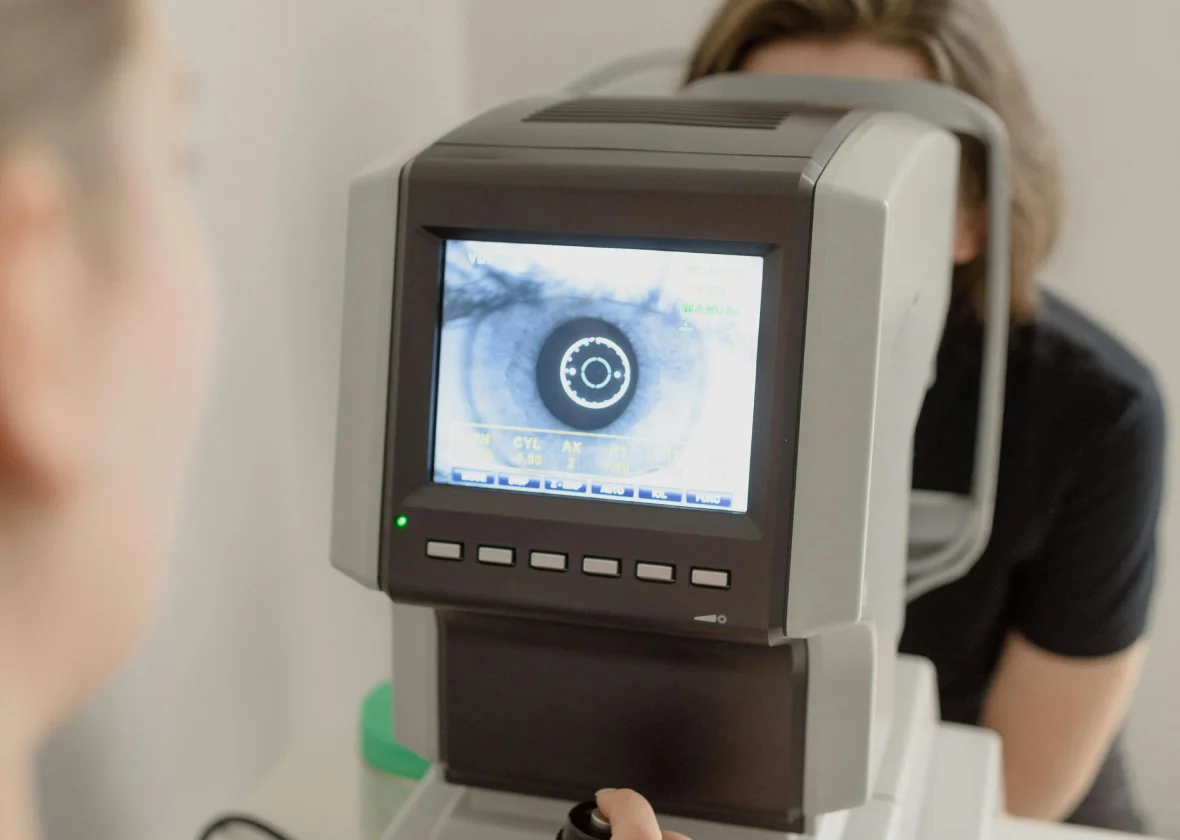
Early and accurate diagnosis allows us to create a customized care plan that can slow progression and preserve as much vision as possible.
While there is no cure for AMD, early detection and treatment can significantly slow vision loss. Treatment options may include:
Anti-VEGF Injections
Medications like Eylea®, Lucentis®, and Avastin® are injected directly into the eye to reduce abnormal blood vessel growth in wet AMD.
Low Vision Aids
Magnifying devices, specialized glasses, and digital tools can enhance remaining vision for daily tasks.
Nutritional Support
For certain cases of dry AMD, specific vitamins (AREDS2 formula) may help slow disease progression.
Regular Monitoring
Ongoing care is essential to detect changes early and modify treatment plans as needed.